Showing posts with label High Fiber Foods. Show all posts

Wednesday, January 4, 2012

Kale Chips: A Super Nutritional Low Calorie Snack


Here's a fast and easy recipe for a really tasty and super nutritious snack. These kale chips are made with just three ingredients (kale, olive oil and nutritional yeast). (PS I know the picture I took looks awful, and you can't see that they are crunchy and dry..)

My nephew told me about this recipe. He's a vegetarian and it's hard for him to get enough B vitamins. One super food that contains tons of these vitamins is nutritional yeast.

Nutritional yeast (amazon link)
contains 18 amino acids (forming the complete protein) and 15 minerals. Being rich in the B-complex vitamins, it is vital in many ways and particularly good for stress reduction. The B-complex vitamins help make nutritional yeast such a valuable supplement, especially to the vegetarian. One element of yeast is the trace mineral chromium, also known as the Glucose Tolerance Factor (GTF). This is necessary to regulate blood sugar and is important for diabetics and people with a tendency toward low blood sugar.


Kale is one of the world's healthiest vegetables. (The other two hugely nutritious greens are swiss chard and collard greens.)

So this recipe combines two of the world's healthiest foods and it's really yummy. It does taste a bit like thin crisp chips. The nutritional yeast has a nice nutty flavor. Hope you will give it a try.

Kale Chips Recipe:

Ingredients:

- a bunch of raw kale (tear into bite size pieces)
- nutritional yeast
- olive oil

Place the kale on a cookie sheet, drizzle with olive oil and then sprinkle a good amount of nutritional yeast over it. Bake it in the oven for about 15 minutes at 375 degrees. And voila!
You have kale chips.

If anyone would like to figure out the calorie count, please let me know! I figure it is about 200 calories at most for a heaping bowl full.

Friday, February 26, 2010

The F-Factor Fiber Diet

Ditch those fad diets, lose weight and keep it off permananently. This book was just discussed on the View today and it is a sane and best way to eat. The emphasis is on eating high-fiber, filling foods and not worrying about carbs, fats or calories.
See the Amazon reviews for The F-Factor Diet.

See a list of ten high fiber foods here.

Wednesday, August 22, 2007

High Fiber Diets

Most people don`t eat enough fiber on a regular basis. If you look back at what all you ate yesterday, it´s likely that you consumed less than 10 grams of fiber unless your diet is high in fruits, vegetables, whole grains or legumes. Fiber provides roughage to our digestive track and helps prevent constipation. Eating a high fiber diet is an easy way to lose weight and feel full and satiated. See an informative video which recommends 35 grams of fiber daily here;

Monday, February 5, 2007

Mushrooms have Amazing Healing Benefits

Mushrooms are often overlooked in today's daily diet but they are loaded with nutrition and amazing health benefits.
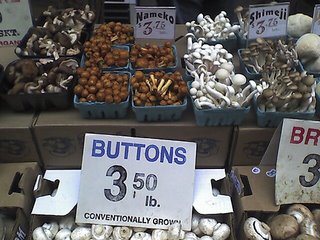
One of the most nutritious mushrooms is the shiitake. (They are on the top left in the photo above). These mushrooms make great meat substitutes. You can eat them on their own sauteed with butter and garlic as a side dish or put them in stir fries and soups.

Shiitake mushrooms have been used medicinally by the Chinese for over 6,000 years. An eight ounce serving (at only 87 calories) will provide you with twenty percent of your daily recommended iron intake, and about ten percent each of Vitamin C, protein and fiber.

Shiitake mushrooms contain lentinan. Lentinan has amazing healing benefits. It boosts the immune system to fight infection or disease. It has been shown to be more effective than prescription drugs in fighting influenza and other viruses. It's also been shown to be effective at destroying cancer cells. And it lowers cholesterol levels in lab animals no matter what kinds of fats they are fed.

Nutrition is still a very young science and it was only just over a year ago that L-ergothioneine, an extremely powerful antioxidant, was discovered in mushrooms:

In research presented at the 2005 American Chemical Society meeting in Washington, D.C., an American research team revealed that mushrooms contain higher concentrations L-ergothioneine than either of the two dietary sources previously believed to contain the most: chicken liver and wheat germ.

Testing mushrooms consumed in the U.S., the team found that shiitake, oyster, king oyster and maitake mushrooms contain the highest amounts of ergothioneine, with up to 13 mg in a 3-ounce serving. This equals forty times as much as is found in wheat germ.

Of the most commonly consumed mushrooms, portabellas and criminis have the most L-ergothioneine, followed by white buttons. White buttons, the most popular of all mushrooms consumed in the U.S., contain up to 5 mg per three ounce serving-12 times as much as wheat germ and 4 times more than chicken liver. And more good news, L-ergothioneine is not destroyed when mushrooms are cooked.


So where to get them and how to cook them? You can find dried shiitake in most supermarkets these days. Before cooking, soak them for about half an hour. Then chop them and discard the stem as well as the tough middle part above the stem. I like to sautee them in butter and garlic and then add them to a steamed vegetable such as kale or swiss chard. They are also really good in miso soup.

Check out the just hungry blog for more info about dried mushrooms. The above photo is by Chika.

Saturday, November 18, 2006

Got Calcium? The Best Non-Dairy Alternatives

Getting enough calcium helps us maintain strong bones and avoid osteoporosis. Over 20 million people in the US have osteoporosis.

Calcium has also been found effective in preventing and treating colon cancer, kidney stones, PMS and inflammatory bowel disease. Aside from deteriorating bones, people who are not getting enough calcium often suffer from muscle pain and spasms as well as tingling or numbness in their hands and feet.

How do you know if you're getting enough calcium? Dairy products are the main source of calcium in the North American diet. Three glasses of milk daily would give the average adult about ninety percent of their recommended daily amount. If the milk is 2%, that would add up to about 370 calories.

I don't drink milk (except in my coffee) and I don't see my friends drinking milk. I eat other dairy products which are high in calcium, especially lots of cheese, but this is probably not the healthiest choice of calories on a serious weight loss regiment (in my case I usually eat it with bread and rich slathers of butter). And I can't be smug about pouring milk into my coffee because coffee is actually one substance that depletes calcium reserves in our bodies.

Fortunately there are some great alternatives to dairy products. Topping the list would be spinach, collard greens, sardines, tofu and soya drinks.

Eating four cups of boiled spinach in a day would provide you with 100% of your calcium requirement for only 165 calories. Spinach is so incredibly rich in other nutrients though that you would be getting mega doses on some of the other key nutrients such as Vitamin K; four cups of spinach provides 4,500 percent of daily requirement(!), Vitamin A; at 1,200 percent; folate; 260 percent, iron; 140 percent, vitamin C; 120 percent; dietary fiber; 70 percent, and the rich list of spinach nutritional benefits keeps on going. (Read more here.)

Calcium is not sensitive to cooking. So boiling or frying your spinach until it is complete mush will not cut down on the calcium count.

No one is going to eat four cups of spinach on a daily basis, but the other foods mentioned here also provide an incredible wealth of other nutrients. Dairy products don't stand much of a chance in this competition. It's worth checking out their health benefits and incorporating them more often in your diet. See more about the benefits of collard greens, sardines, tofu and soybeans here.

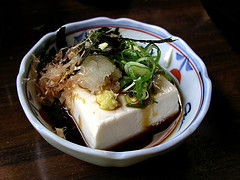
The photo above is a tofu-based lunch by Blue Lotus.

Wednesday, September 13, 2006

How to cook Corn on the Cob

This is the season for fresh corn. Eating corn on the cob is a great way to fill up on a delicious, nutritious and low calorie food. Corn is very high in fiber. A one cup serving (at 177 calories) will provide you with about 18% of the recommended daily value of fiber.

Corn is also high in folate, (19% of daily recommended), Vitamin B1, (24%) and Vitamin C (17%).

I bought six corn on the cobs to make for dinner tonight for my husband, toddler and me.

Corn on the cob is one of the easiest fresh vegetables to cook. I husk the corn and pull off any excess threads. Then I boil water in a large pot and put the corn in when the water is boiling. I then turn the heat off, and leave the corn in the boiled water for at least five minutes. Some people like it less cooked and would take it out sooner.

I usually put a little butter and salt on my corn when eating. But I've heard flax seed oil would make a good and healthy substitute.

____
The photo above is by Akash k.